
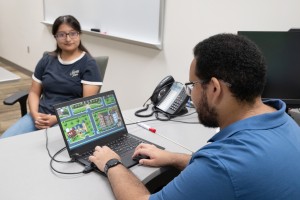
Mount Saint Mary College SURE students Ennis Cruz of Newburgh, N.Y. and Leandro Ortiz of the Bronx, both Game Development majors, work on “Mini-Mount: MSMC in 2D” on July 8, 2026.
Imagine walking across the Mount Saint Mary College campus, but instead of the steep hills of the Hudson Valley, you’re surrounded by a pixelated 2D wonderland.
Thanks to the ingenuity of two talented Game Development majors, that virtual campus is now a reality.
Created by juniors Ennis Cruz of Newburgh, N.Y. and Leandro Ortiz of the Bronx, “Mini-Mount: MSMC in 2D” is a fully functional video game designed as a digital love letter to the college. The project was developed during the Mount’s 2026 Summer Undergraduate Research Experience (SURE) – an eight-week program that pairs undergraduate students across all academic disciplines with faculty mentors to conduct intensive, collaborative scholarly research and creative projects. Under the guidance of Lee Fothergill, professor of Mathematics, Cruz and Ortiz spent their summer transforming the campus into an interactive 16-bit-style world.
The Mount’s Bachelor of Science in Game Development, housed within the Division of Mathematics and Information Technology, takes an interdisciplinary approach to game development. Students learn to build both 2D and 3D games by mastering modern programming languages, software engineering practices, and professional game engines, while simultaneously honing their artistic and communication skills. Projects like “Mini-Mount” encapsulate the major's core philosophy: applying complex computational principles to creatively solve problems, engage audiences, and spark wonder.
“Mini-Mount” acts as both a digital map and a retro arcade hub. Players explore a top-down rendering of the Mount, complete with iconic landmarks and accurate details, right down to the blue “MSMC” emblazoned lawn chairs outside of the Kaplan Recreation Center. As players navigate the pixelated grounds as the college’s mascot, Mack the Knight, they can enter all the major campus buildings to play custom mini-games specifically themed to those locations.
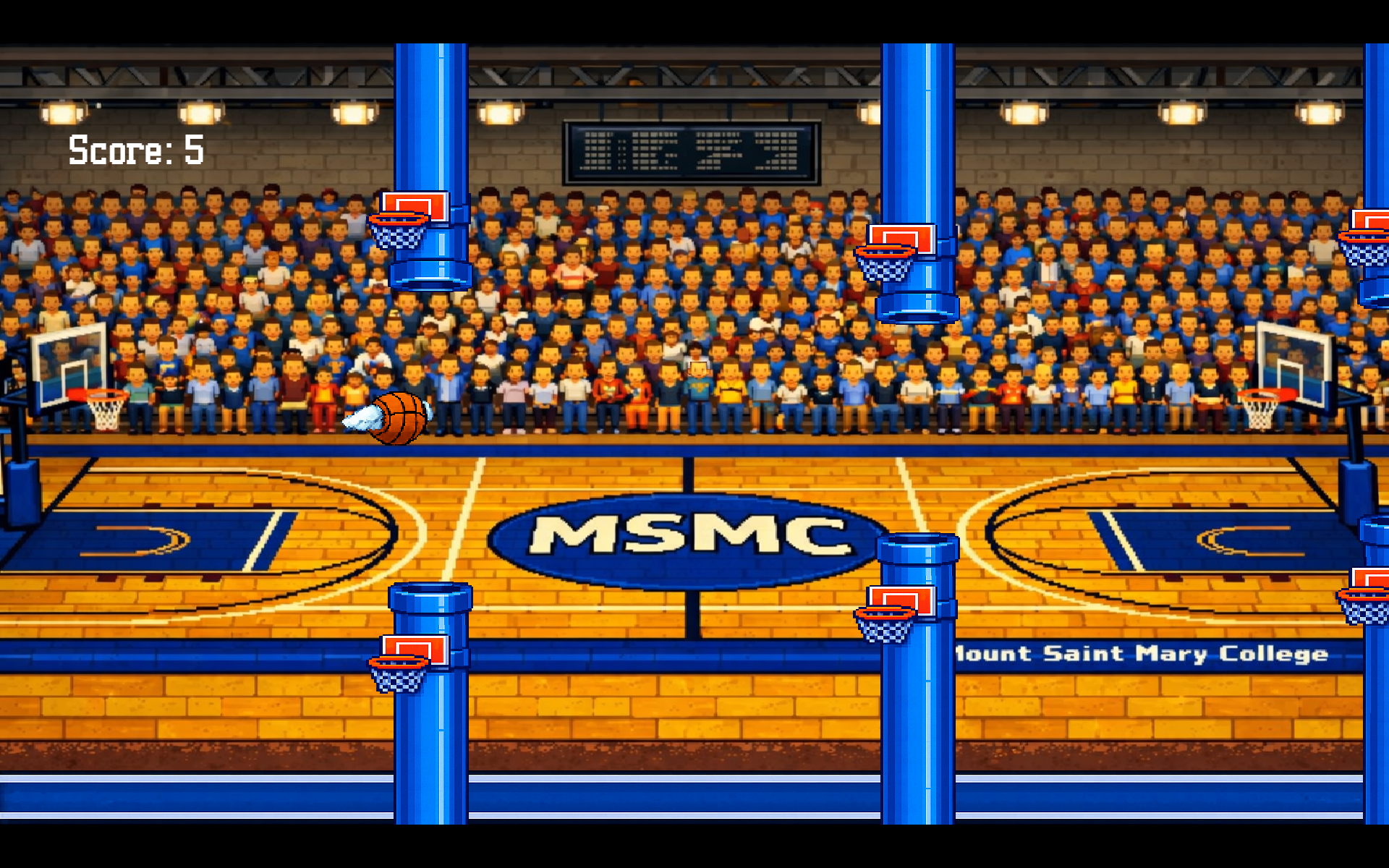
Head over to the Kaplan Recreation Center to play a Mount-themed clone of Flappy Bird, where players dodge basketball hoops. Need a study break? The Dominican Center Library and Learning Center features a top-down maze where players must collect books to open new passageways. Over at Sakac Hall, players are treated to a classic side-scrolling platformer, while the Villa hosts a memory-matching game utilizing iconic campus photography.
Building such an expansive project in just eight weeks was a monumental task, note Cruz and Ortiz. To manage their files and workflow seamlessly, the team utilized GitHub as a digital storage unit.
They also leveraged modern artificial intelligence tools like Copilot and Gemini to streamline their workflow, though they were careful to maintain strict creative control: “We didn’t have the time to create the graphics we wanted by ourselves,” Ortiz explained. “So we used AI as much as possible as an efficient partner, as opposed to something that just creates everything.”
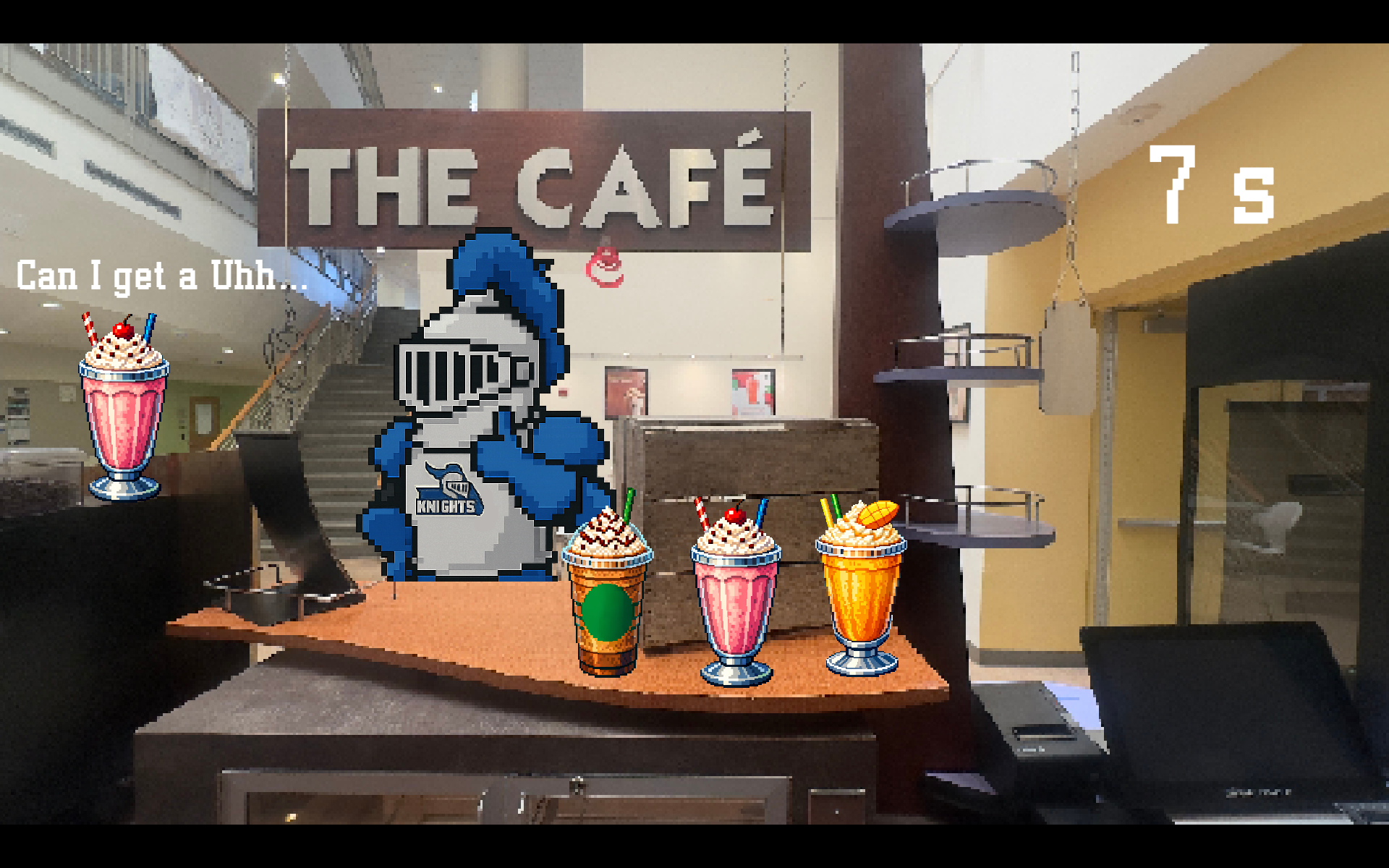
Copilot served as a “great co-artist” for generating base images, which Cruz and Ortiz would then meticulously edit pixel-by-pixel using tools like Piskel and Resprite. “I used a pixel knight as a reference so I could make Mack the Knight,” Cruz noted, explaining how she matched the game's sprites to the official color codes provided by the college.
The engine of the game, Construct 3, uses a visual coding system that occasionally didn’t cooperate during complex tasks. While building a sequence for Aquinas Hall, Ortiz found himself wrestling with the engine's internal priority system. But for game designers in training, it was just another day at the office.
“I remember one day when every time we put in one of the actions, it would mess up the whole entire priority system of the engine internally,” he recalled. “I had to go in and manually play with those to make it align.”
To complete the retro aesthetic, the pair even produced their own chip music using FL Studio, a professional digital audio workstation, giving the campus a nostalgic soundtrack that would fit right with computer gaming in the mid ’90s.
It was a lot to fit into just eight weeks, but the demanding schedule forged a strong collaborative bond between the two developers. "Our teamwork was phenomenal," Ortiz said, noting that his prior experience with the game engine allowed him to guide Cruz through roadblocks.
You can step into the pixelated shoes of Mack the Knight and play “Mini-Mount” right now at www.msmc.edu/programs/game-development